

Catering services directly influence the success of many events, from corporate meetings and weddings to product launches and family celebrations. Working with a professional catering company is critical to ensuring that your event runs smoothly. However, certain mistakes frequently encountered in the industry can damage service providers’ reputations and negatively affect customers’ special occasions.
In this guide, we examine the most common mistakes made in catering events in detail and offer practical solutions for avoiding these pitfalls. Whether you are a customer considering catering services or a professional seeking to improve service quality in the industry, this information serves as a roadmap for ensuring that your events run flawlessly.
Most catering mistakes result from shortcomings during the planning stage. When the right questions are not asked, details are overlooked, or communication breaks down, the resulting issues can turn into crises on the day of the event. Awareness in advance and proactive measures are the most effective ways to minimize these risks.
The Problem of Incorrect Portion and Quantity Calculations
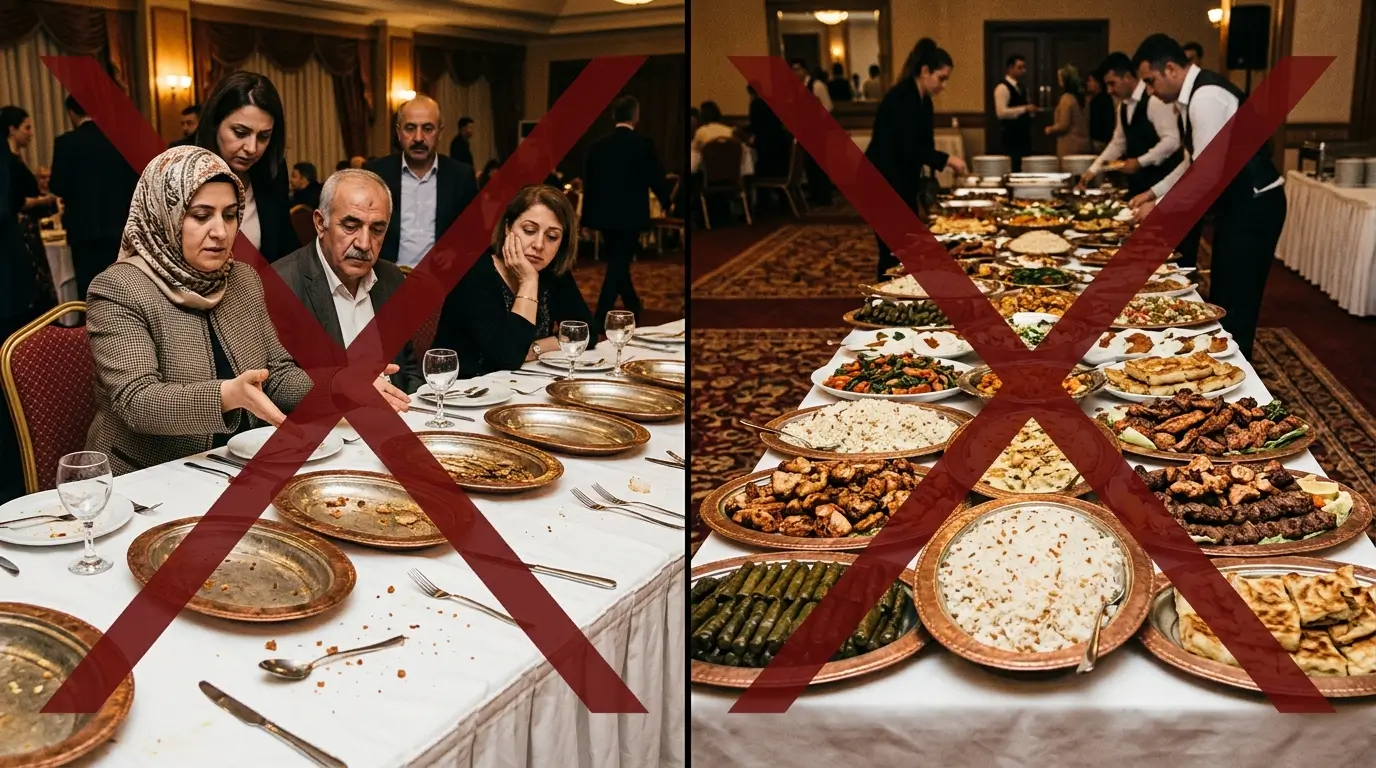
At catering events, one of the most common mistakes is calculating food quantities that do not match the number of guests. When insufficient food is prepared, the last guests to arrive may go hungry, leaving the host in an embarrassing situation. When too much food is prepared, the budget increases unnecessarily and food is wasted. Both scenarios create an unprofessional impression.
The main cause of quantity calculation errors is an inadequate analysis of the guest profile. The eating habits of guests at a business meeting differ from the appetites of wedding guests. Average age, event time, seasonal conditions, and activities in the programme directly affect consumption levels. For example, guests tend to eat less at a wedding with an active dance floor, while portions are usually fully consumed at a seated gala dinner.
The first step in determining the correct quantity is to confirm the exact number of guests. Attendance should be confirmed through an RSVP system, with a buffer of ten to fifteen percent allowed for last-minute changes. Portion weights per person should then be set for each menu item and the total requirement calculated. Experienced catering companies use data from previous events to perform these calculations with a high degree of accuracy.
The difference between buffet and seated service significantly affects quantity planning. In a buffet arrangement, guests choose their own portions and generally want to sample a variety of dishes; therefore, larger quantities of each item should be prepared. In seated service, portions are controlled and waste is minimized. In hybrid models, quantities should be balanced by determining which dishes will be offered through each type of service.
A phased preparation strategy can be used to prevent food waste. Eighty percent of the main batch is served initially, while the remaining twenty percent is kept warm and added as required according to demand. This eliminates the risk of shortages while preventing unnecessary waste. Directing leftover food to charitable organizations after the event is also a valuable practice in terms of both social responsibility and sustainability.
Overlooking Menu Planning and Dietary Requirements

The foundation of a successful catering event is a menu designed to suit the guest profile. It is impossible to satisfy every guest with a single uniform menu. Vegan, vegetarian, gluten-free, lactose-free, halal, and kosher dietary preferences are no longer exceptions but standard expectations. Ignoring these requirements may leave guests without suitable food or cause health problems.
A lack of menu variety is a common problem, particularly at corporate events. A meat-focused menu excludes vegetarian employees. Offering only Western cuisine may disappoint guests from different cultural backgrounds. A balanced menu provides enough variety to accommodate different tastes and dietary habits. A selection ranging from Mediterranean cuisine and Asian flavours to traditional recipes and modern fusion creations is the ideal solution.
Allergen management is vital in catering services. Peanuts, shellfish, eggs, milk, wheat, and soy are among the most common allergens. A guest experiencing an anaphylactic reaction could turn the event into a disaster. Clearly displaying allergen information on menu cards, preventing cross-contamination in the kitchen, and briefing the service staff are essential steps.
Information should be collected at the invitation stage to identify dietary requirements. RSVP forms should include a question about special dietary preferences, and the collected data should be shared with the catering team. On the day of the event, special dietary menus should be clearly labelled and served directly to the relevant guests. This proactive approach makes guests feel valued.
Children’s menus are another area that is frequently neglected. Adult portions and flavour profiles are unsuitable for younger guests. Child-friendly foods, appropriate portion sizes, and entertaining presentations require separate planning. Ensuring that families are comfortable positively affects the overall atmosphere of the event.
Disruptions in Timing and Service Flow

Timing is one of the most critical factors determining the success of a catering event. Serving food late makes guests impatient, while serving it too early results in cold dishes. When a main course that should be hot arrives lukewarm, or a cold appetizer reaches room temperature, all the preparation effort is wasted. Timing errors seriously damage the perception of professionalism.
Poor planning of preparation processes is the most common cause of timing problems. Every dish has a different cooking time, resting period, and pre-service preparation requirement. The start time should be determined by calculating these periods backwards. Kitchen coordination, service-team preparation, and logistical processes should be combined into a single timeline.
The synchronization of food service with the event programme is often overlooked. At a wedding, important moments such as cutting the cake, speeches, or the first dance should not conflict with food service. At corporate launches, the sound of plates during a stage presentation can be distracting. A detailed schedule should be shared between the organizer and the catering team, and service times should be planned accordingly.
Hot-holding and cold-storage systems provide flexibility in timing. Chafing dishes, bain-marie units, and insulated food boxes keep hot dishes at the ideal temperature. Refrigerated service units preserve the freshness of appetizers and desserts. These systems prevent minor delays from turning into crises. However, no equipment can preserve the quality of food left waiting for hours; the underlying timing must therefore be correct.
Waitstaff coordination is essential for uninterrupted service flow. Which waiter will serve which table, the order in which plates will be delivered, and when empty plates will be cleared should all be planned in advance. A radio communication system enables real-time coordination between the kitchen and service area. A well-trained and coordinated team minimizes timing errors.
Negligence and Risks in Hygiene Standards
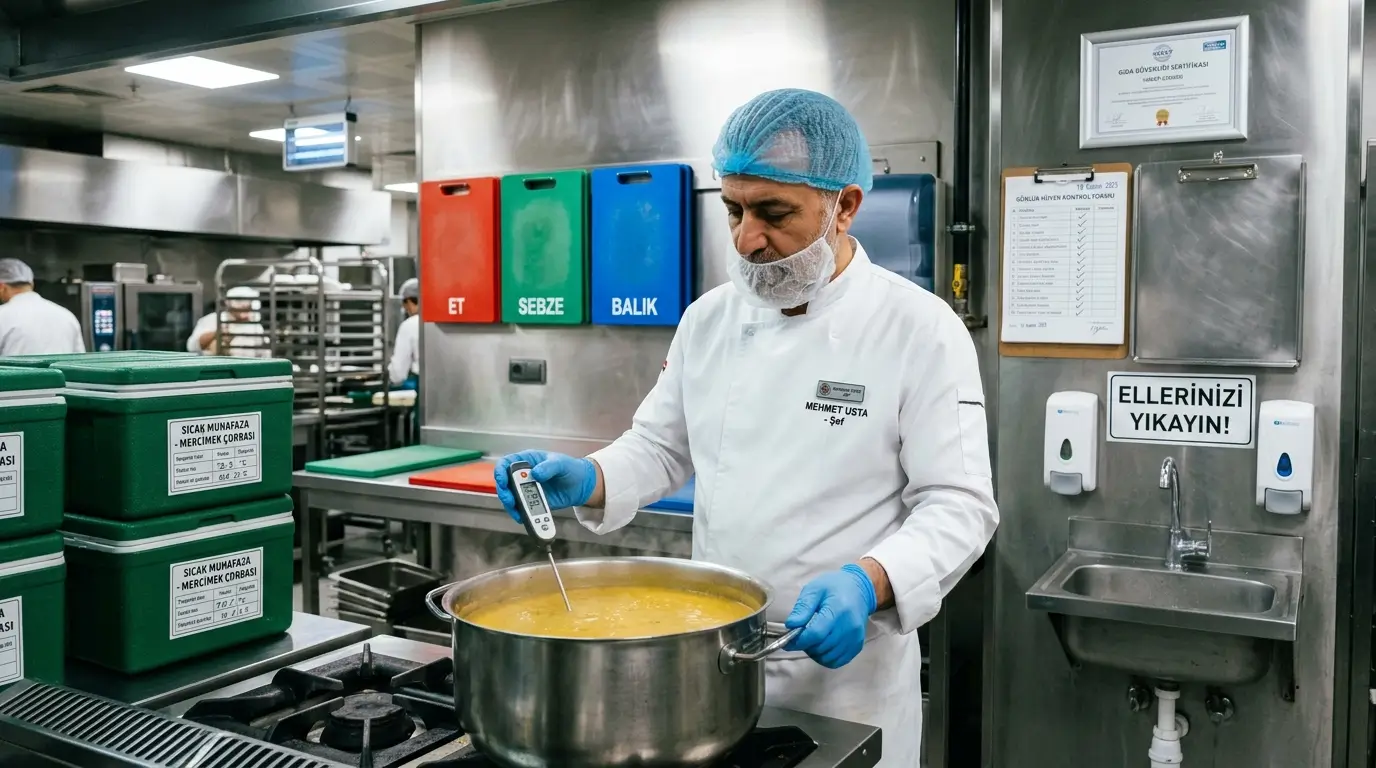
Food safety is a top priority on which no compromises should ever be made in catering services. The smallest hygiene failure in food consumed simultaneously by hundreds of guests can cause mass food poisoning. Such an incident not only endangers guests’ health but also irreparably damages the catering company’s reputation, in addition to possible legal sanctions and compensation claims.
A break in the cold chain is one of the most common causes of foodborne illness. Meat, dairy products, seafood, and prepared salads must be stored within specific temperature ranges. Temperature checks should be carried out during transportation from the supplier to the kitchen and from the kitchen to the service area. Refrigerated vehicles, portable coolers, and digital thermometers are indispensable tools in this process.
The risk of cross-contamination is often overlooked, even in professional kitchens. Serious health problems can arise when a cutting board that has been in contact with raw meat is used to prepare vegetables or when allergen-containing ingredients contaminate other foods. Colour-coded equipment systems, separate preparation areas, and regular handwashing protocols minimize these risks.
Staff hygiene is the foundation of food safety. Kitchen and service teams must undergo daily health checks, and anyone showing signs of illness must be kept away from work. The use of disposable gloves, hairnets, and aprons is standard practice. Hand-sanitizer stations should be accessible to both staff and guests.
The hygiene of the event area must not be forgotten. Service tables, buffet counters, and food containers should be sanitized before use. Covering food or using lidded serving dishes at buffets protects it from external contaminants. Waste management and cleaning protocols must be fully implemented after the event.
Critical Mistakes in Customer Communication
Communication failures in catering services can cause consequences as damaging as technical errors. When the customer’s expectations are not properly understood, even the most delicious food can disappoint. When event details are not clearly communicated, chaos on the day of the event becomes inevitable. Good catering begins with communication skills before culinary ability.
Failing to ask enough questions during the initial consultation can lead to major problems later. The type of event, guest profile, venue characteristics, budget limits, theme expectations, and special requests should all be understood in detail. A written brief should be prepared and approved by both parties. This document is used as a reference during the organization process and helps prevent potential disputes.
Uncertainties during the quotation stage can turn into unexpected costs on the day of the event. Menu items, portion sizes, number of staff, equipment list, transportation fees, and additional services should be clearly specified. Included and excluded items must be separated explicitly, and potential extra costs should be disclosed in advance. Transparent pricing builds customer trust.
Regular communication should continue throughout the period before the event. Details should be reconfirmed a few weeks before the event date, and final changes should be recorded. A final meeting should be held one week in advance to review the entire process. At this stage, updates to the guest count, menu revisions, and logistical changes should be finalized.
Communication channels for the event day should be determined and tested in advance. Everyone should have the contact details of the catering team’s on-site representative, the organizer’s contact information, and the emergency protocols. Responding quickly to immediate problems prevents crises from escalating. Collecting feedback after the event is also an important part of communication.
Insufficient Staffing and Training Deficiencies
The quality of catering services is directly proportional to the competence of the personnel working on-site. When too few staff members are assigned, service is delayed, tables are left unattended, and guests feel neglected. Untrained personnel reduce service quality, damage the professional image, and cause customer dissatisfaction. Both scenarios negatively affect the catering company’s reputation.
Staffing requirements vary according to the type of event and service model. For seated service, the general rule is one waiter for every ten to twelve guests. This ratio can be more flexible for buffet service, but staff should remain continuously stationed at buffet areas. More personnel are required for mobile tray service at cocktail parties. Additional staff should be assigned to VIP tables or special guests.
Technical training for service personnel is the foundation of professional service. Plate-carrying techniques, wine-service protocols, buffet management, and table-clearing sequences are standard skills. These training sessions should be repeated regularly, and new employees must undergo orientation. An apprenticeship period alongside experienced staff helps develop practical skills.
Customer-relations training is as important as technical skills. Personnel are expected to be friendly, respectful, and proactive. Skills such as listening to guest requests, approaching problems with a solution-oriented mindset, and remaining calm under pressure should be developed. Role-playing exercises and scenario-based training teach staff how to handle difficult situations.
Staff motivation and team harmony are invisible factors affecting service quality. Fair working conditions, timely payment, and a culture of appreciation increase employee loyalty. A pre-event team briefing ensures that everyone works toward the same objective. Post-event evaluation meetings provide opportunities for feedback and continuous improvement.
Mistakes in Presentation and Aesthetic Details
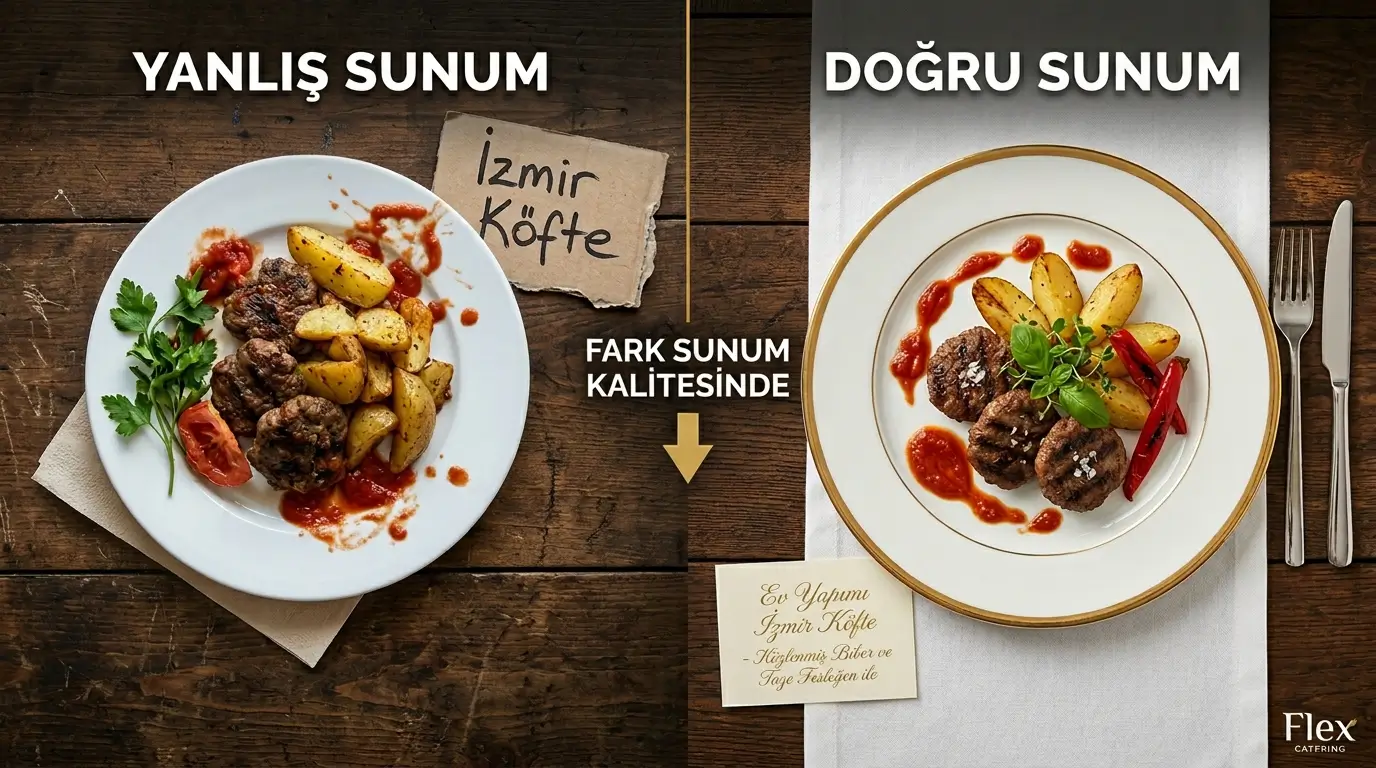
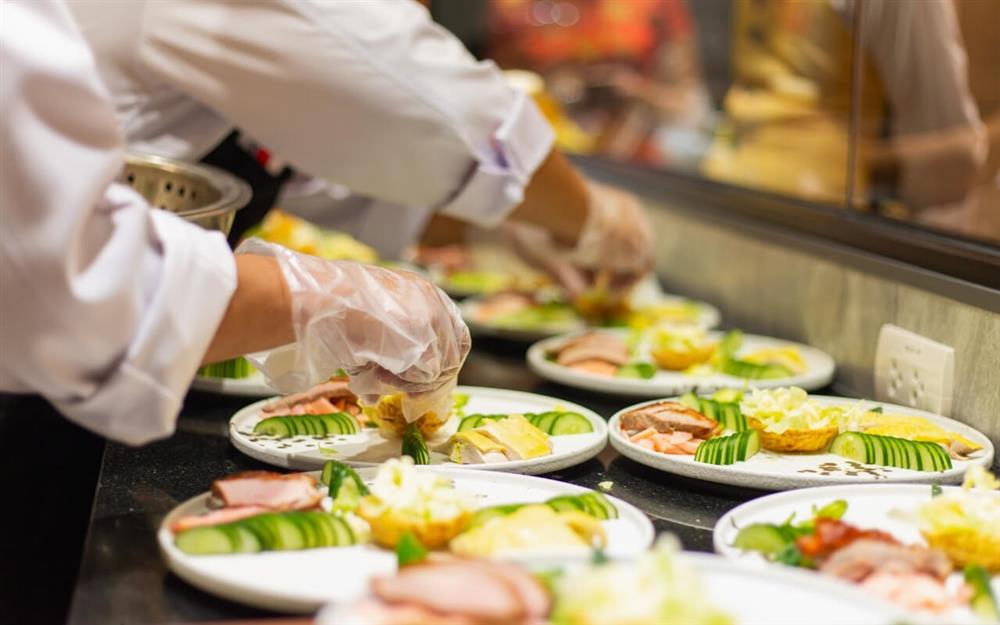
Presentation shapes the guest experience as much as the taste of the food. An unappealing plate negatively affects the perception of flavour; this is a proven fact in gastronomy. Presentation quality is one of the key factors determining the overall impression of a catering event. Neglecting aesthetic details can overshadow all the preparation work.
Plate arrangement and portioning form the basis of presentation aesthetics. Rather than placing food randomly on the plate, a deliberate composition should be created. Colour contrasts, texture variety, and height balance should be considered. Sauce decorations, microgreens, and edible flowers add professional touches. Excessive decoration, however, can create an artificial impression, so balance is essential.
The buffet arrangement is where the visual impact is most strongly felt. Using stands of different heights creates visual depth. Dishes should be arranged with colour transitions in mind, and hot and cold sections should be clearly separated. The area in front of the buffet should be wide enough to prevent crowding, while plate and cutlery stations should be positioned for easy access.
The quality of service equipment directly affects the perception of presentation. Scratched plates, stained glasses, or rusted cutlery create an unprofessional impression. Premium porcelain, polished metal, and crystal glassware should be used. Tablecloths, napkins, and decorative elements should be selected to complement the event theme.
Lighting is the hidden hero of food presentation. The correct angle and colour temperature make dishes look appetizing. Lighting that is too bright creates an artificial atmosphere, while lighting that is too dim appears gloomy. Ideal lighting conditions should be provided for the buffet area and dining tables, with care taken to ensure accurate colour rendering in photographs.
Deficiencies in Emergency Planning and Crisis Management
Even the most meticulous planning can encounter unexpected situations. Power cuts, equipment failures, staff illness, changes in weather conditions, or supply disruptions are possible crisis scenarios in catering operations. Being caught unprepared can turn the event into a disaster. Professional catering requires a Plan B for every possibility.
Equipment redundancy safeguards operational continuity. A backup cooking unit for use if the main stove fails, a portable refrigerator for use if the cooling system stops working, and generator support should be included in the standard preparation set. Maintenance schedules for critical equipment should be monitored regularly, and a final inspection should be carried out before the event.
Staff redundancy should be planned in the same way. Last-minute illness or transportation problems may occur. Backup personnel should be kept on the call list, and flexible workers who can step in during emergencies should be identified. Having an additional staff member on standby on the day of the event provides protection against unexpected situations.
Supply-chain risks should be assessed in advance. Alternative sources should be identified in case the main supplier experiences problems, and backup stock should be maintained for critical ingredients. Possible menu changes should be considered beforehand in case seasonal products cannot be sourced. A customer-communication protocol should be activated when compulsory changes are required.
Communication and decision-making mechanisms must be clear during a crisis. Who has which authority, who should be contacted, and which steps should be taken must all be determined in advance. A systematic response rather than panic minimizes the impact of the crisis. Problems experienced after the event should be analyzed, and lessons learned should be documented for future events.
Weather conditions create an additional risk factor at outdoor events. Preparations should be made for sudden rain, strong winds, or extreme heat. Canopies to protect food, weighted systems against wind, and cooling solutions to prevent spoilage in hot weather should be included in the standard equipment set. Weather forecasts should be monitored throughout the event week, and an alternative indoor area should be identified when necessary.
Your event shares not only flavour but also kindness. Contact us now and let us begin making a difference for you.
Address: 5709/4 St. No:26 Cennetoğlu District, Karabağlar / İZMİR
Phone: +90 232 482 34 62
Email: info@flexcatering.com