

15 Factors Affecting Per-Person Catering Costs at Corporate Events
When planning a corporate event, the most critical question is: "How much should catering cost per person?" There is no single answer to this question. Corporate catering prices are influenced by many variables, from the guest profile and venue to the menu and logistics.
In this article, we explain the 15 key factors that determine corporate catering prices, budget planning strategies, and the cost traps that companies frequently encounter from a professional perspective.
What Is the Cost of Corporate Catering?
Corporate catering cost is the total cost per guest for food, beverages, service, and operational services at a corporate event. This cost covers not only the food served on the plate but also the entire service chain behind it.
A professional corporate catering quotation consists of three main categories:
- Direct costs: Raw materials, food production, and equipment.
- Indirect costs: Personnel, logistics, and presentation.
- Additional services: Certification, insurance, presentation aesthetics, and VAT.
Important Note: At corporate events, the "cheapest" quotation often turns into the "most expensive" experience. This is because low-priced quotations may involve hidden costs or compromises in quality.
15 Factors That Determine Per-Person Catering Costs
Food and Menu Factors
1. Number of Guests
Economies of scale apply in corporate catering. The per-person cost of an event for 150 guests is generally lower than that of an event for 50 guests. This is because fixed operational costs such as transportation, setup, and core staffing are distributed across more people.
2. Number of Menu Options
There may be a 40–70% cost difference between a menu containing 3 main courses, 2 hot appetizers, and 2 desserts and one containing 8 main courses, 6 hot appetizers, and 4 desserts.
3. Ingredient Quality
Premium products such as Norwegian salmon, Mediterranean sea bass, beef tenderloin, and imported cheeses are 2–3 times more expensive than standard products. The guest profile at the corporate event determines the appropriate level.
4. Special Dietary Menus
Vegan, vegetarian, gluten-free, halal, and kosher menus are planned separately from standard menus. Events requiring multiple dietary menus incur an additional cost of 10–20%.
5. Beverage Package
Beverages are generally priced separately. There are significant cost differences between packages offering only water and carbonated drinks, comprehensive non-alcoholic options, and premium alcoholic selections. Wine pairing accompanied by a sommelier is an additional item for premium events.
Service and Presentation Factors
6. Service Style
The service model directly affects the cost:
- Buffet: The most economical model. Fewer personnel are required.
- Table service: The number of waitstaff increases, raising the cost by 20–40%.
- Extended cocktail reception: Roving canapé service is generally mid-range in cost.
- Live cooking station: A premium concept that adds 30–50% to the cost.
7. Number of Service Personnel
The professional standard is 1 waiter for every 20–25 guests. At VIP events, this ratio may be reduced to 1 waiter for every 10 guests. The number of personnel is directly reflected in the per-person cost.
8. Presentation Aesthetics
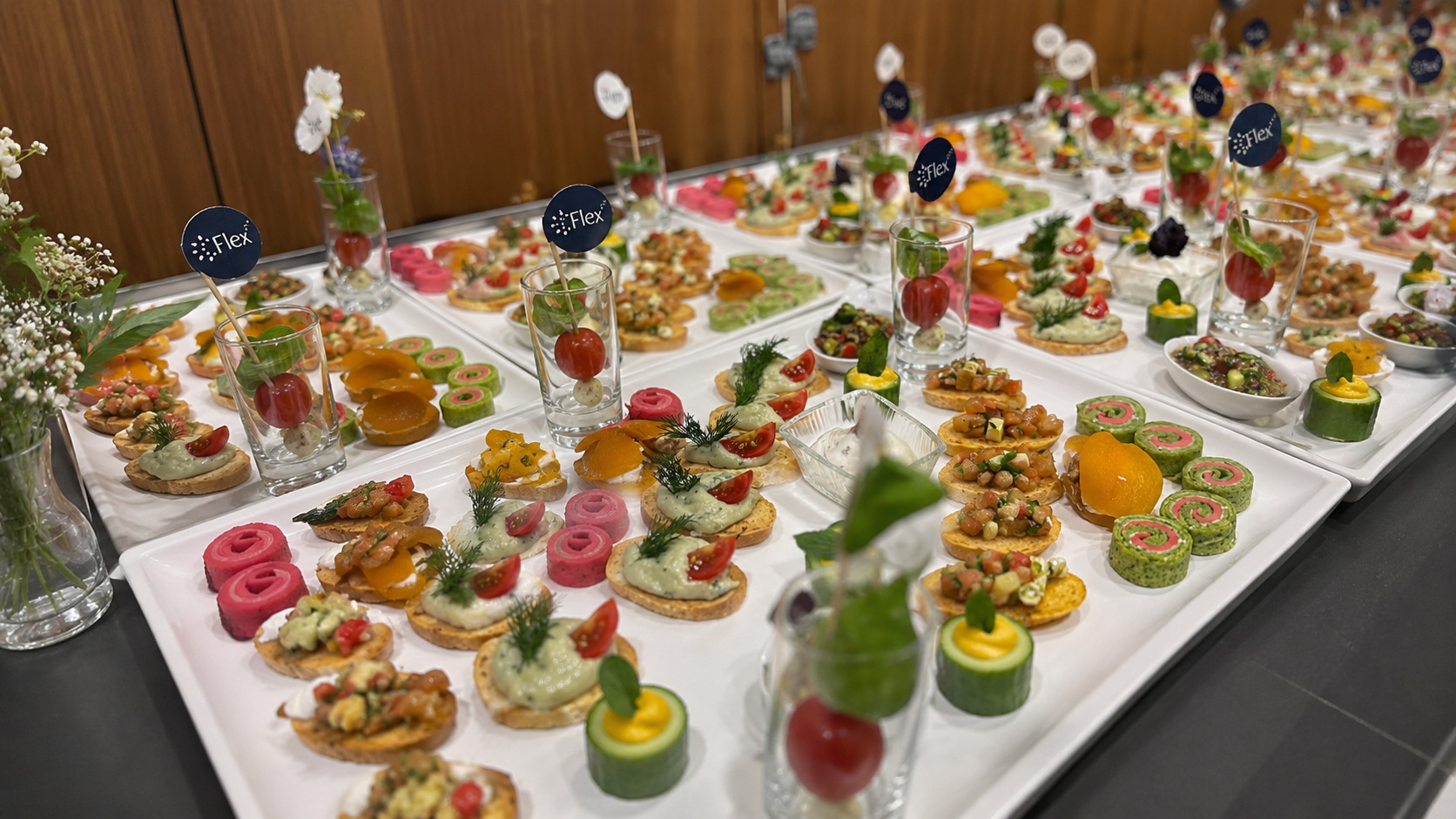
Decorative plates, custom presentation displays, floral arrangements, and lighting determine the visual quality of a corporate event. Premium presentation concepts add 15–25% to the per-person cost.
Venue and Logistics Factors
9. Venue Type
The venue infrastructure directly affects the cost:
- Hotel or restaurant with a fully equipped kitchen: The most economical option.
- Company office or meeting room: A mobile kitchen may be required.
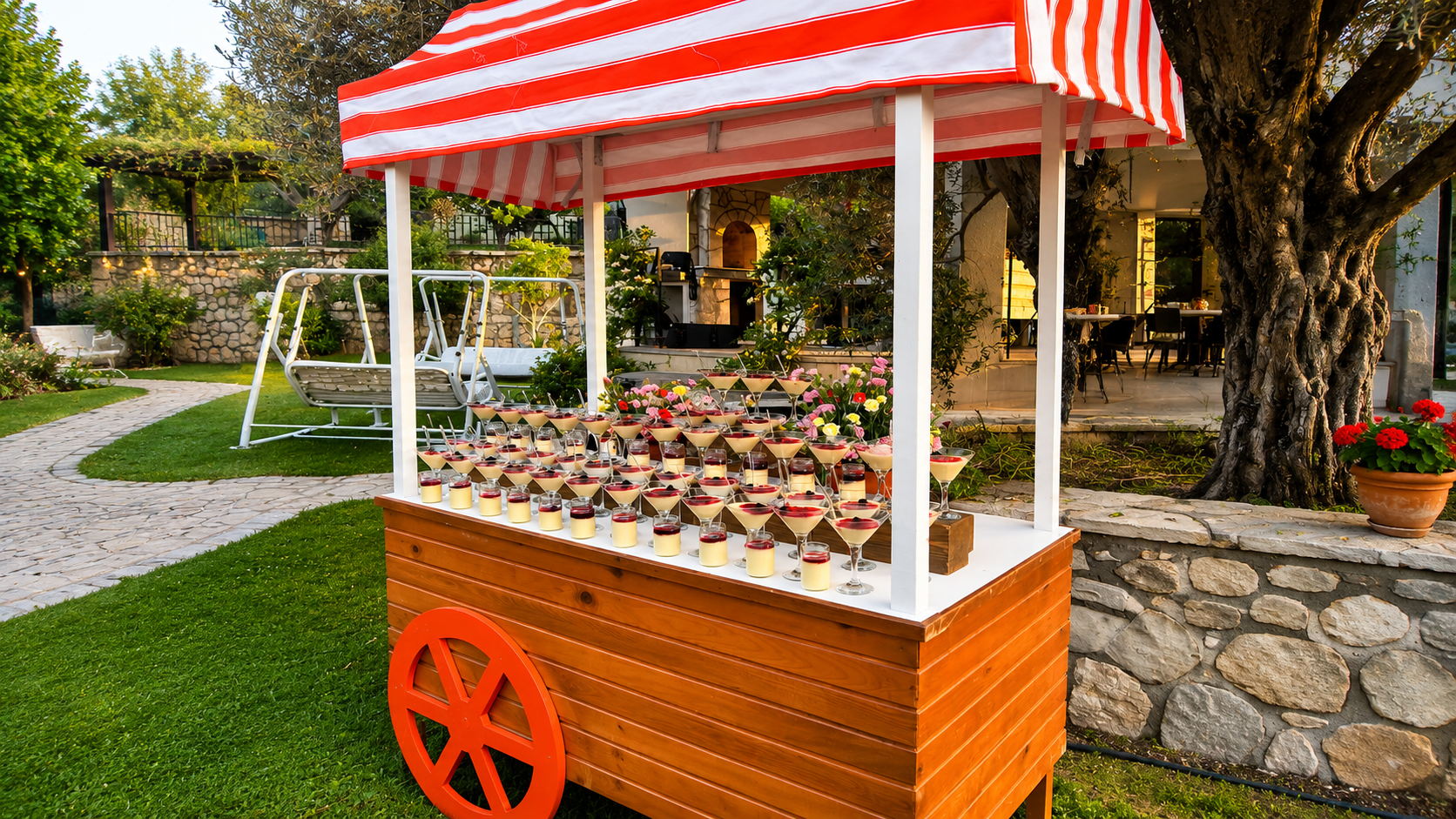
- Outdoor venue (garden, rooftop, countryside): Additional cooling, generator, and tent costs apply.
10. Logistics Distance
The distance between the venue and the catering company affects transportation, equipment delivery, and personnel overtime costs. Logistics charges differ significantly between central İzmir and distant locations such as Çeşme and Karaburun.
11. Event Duration
A 3-hour cocktail reception and a 6-hour full programme fall into different cost categories. As the duration increases, personnel overtime, equipment usage, and repeated service costs also rise.
12. Event Time and Day
Weekends, late-night hours, and public holidays incur overtime surcharges. There is a significant difference between a weekday office breakfast and a Saturday-night gala dinner.
Certification and Professionalism Factors
13. Hygiene and Quality Certifications
Companies holding ISO 22000, HACCP, and TSE certifications generally quote prices 10–15% higher than uncertified companies. However, these standards are essential for food safety at corporate events.
14. Insurance and Liability Coverage
Professional catering companies carry professional liability insurance. This insurance provides protection against potential food-related health problems or operational accidents. Insured operations add to the cost.
Indirect / Hidden Costs
15. VAT, Service Gratuity, and Additional Costs
The hidden cost items that should be considered in corporate catering quotations include:
- VAT (10% or 20%)
- Service gratuity (5–10%)
- Setup and breakdown fees
- Late-hour overtime charges
- Equipment rental fees
- Spare attire and custom uniform costs
These items may account for 20–30% of the net price.
A 10-Step Plan for Preparing a Corporate Catering Budget
- Clarify the purpose of the event. A product launch, gala, training session, and celebration each require a different budget.
- Determine the number and profile distribution of guests.
- Set the event date and time.
- Choose the venue. Its infrastructure directly affects the budget.
- Obtain detailed quotations from at least 3 corporate catering companies.
- Compare each quotation item by item—the total amount can be misleading.
- Check their certifications and insurance policies.
- Request a tasting session.
- Ensure every item is included in writing in the contract, including VAT, service, and additional costs.
- Create a Plan B for unexpected guests, weather conditions, and logistics scenarios.

Common Mistakes in Corporate Catering Costs
Common cost-related mistakes companies make during procurement processes include:
- Looking only at the total price: Hidden costs may be overlooked unless quotations are compared item by item.
- Failing to ask whether VAT is included: This may result in an unexpected 20% difference after the quotation.
- Not checking the number of service personnel: Insufficient staffing reduces event quality.
- Working with an uninsured company: A food-related health problem may expose the company to reputational damage and financial risk.
- Not requesting certifications: Failing to verify ISO 22000 and TSE quality standards creates risk.
- Misjudging the guest profile: An economy menu for senior-level guests may damage the company's reputation.
When Is a Professional Catering Company Essential?
If any of the following conditions apply, you should definitely work with an experienced catering company that has a professional corporate structure:
- You are planning a corporate event for more than 50 guests
- The guest profile includes VIPs, board members, or international guests
- The event represents a high-level brand reputation, such as a launch, gala, or industry gathering
- The venue has no kitchen infrastructure
- Multiple menus are required for guests with special dietary needs
- Certification, insurance, and quality standards must be managed with zero tolerance
Frequently Asked Questions - Corporate Catering Costs
How much does corporate catering cost per person?
Per-person corporate catering prices vary widely depending on the menu content, service style, venue infrastructure, and certification level. To obtain an exact price, you need to request a quotation tailored to the details of your event.
What questions should you ask when requesting a corporate catering quotation?
The 10 critical questions are: Is VAT included? Is the service gratuity charged separately? Which certifications does the company hold? What does the insurance cover? How many personnel will be assigned? Who provides the equipment? Are setup and breakdown included? Is the tasting session charged separately? Is there a Plan B? What are the penalty clauses?
What is the price difference between buffet and table service?
Table service is 20–40% more expensive than buffet service because it requires more waitstaff, more service equipment, and a longer operation.
When should the budget for a corporate event be planned?
It is recommended that the cost be allocated as an event item in the company's annual budget. Discussions with catering companies should begin at least 2–3 months before the event date. For the summer season, this period extends to 4–6 months.
What should catering be like for a senior executive meeting?
For senior-level meetings, small portions prepared with premium ingredients and served as table service or gourmet cocktail menus should be preferred. Certification, presentation aesthetics, and the quality of service personnel are more critical than at standard events.
Is event decoration included in the catering price?
Generally, it is not. Floral arrangements, tablecloths, lighting, and branding materials are priced separately. Some companies offer integrated packages.