

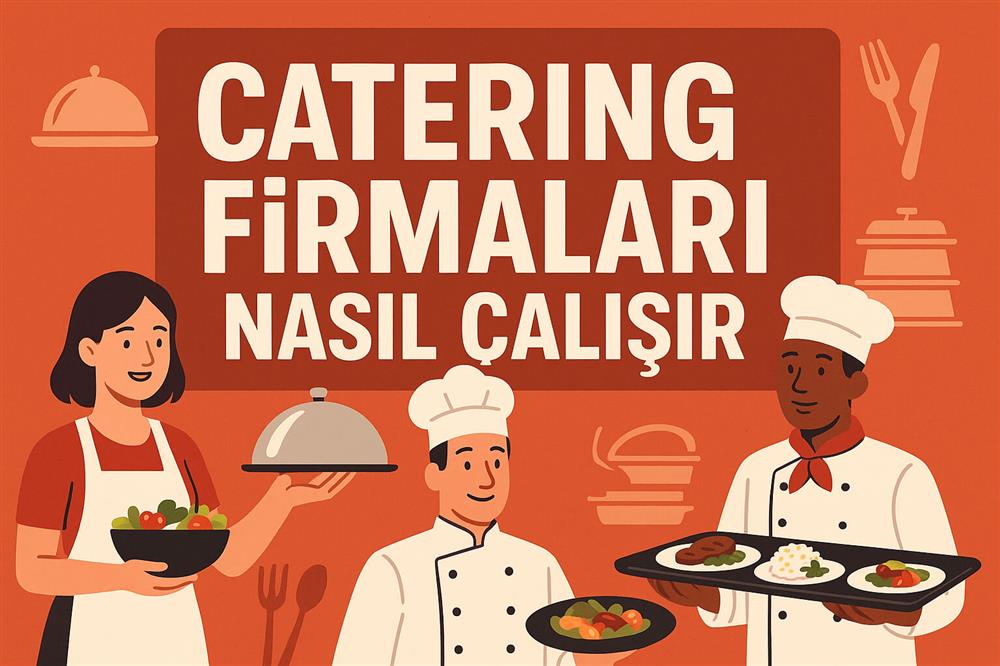
Catering companies are businesses that professionally plan and manage food and beverage services for events. They prepare menus according to the requested concept, produce the meals, and organise the service process. Depending on the type of service, the food is either prepared at the event venue or produced in a central kitchen and transported to the venue while maintaining the hot and cold chain.
A company’s working process generally begins with an initial consultation with the client. The type of event, number of guests, location, menu preferences, and special requests are determined. Planning is then carried out in accordance with these requirements. Once the menu is approved, the kitchen team begins preparations. At the same time, logistics, equipment, and personnel are coordinated. Every detail is organised to suit the flow of the event.
Professional catering companies do more than simply serve food. They simultaneously manage several aspects, including table arrangements, presentation style, service staff, hygiene standards, and time management. This approach preserves the integrity of the event and provides guests with a flawless experience. From corporate events to special occasions, every organisation is professionally managed through this meticulous planning process.
Which Hygiene and Quality Standards Are Applied During the Production Process?
During the production process, hygiene and quality standards are meticulously applied to ensure food safety and maximise guest satisfaction. Every stage, from food production to service, is managed through a controlled and traceable process. Critical areas such as ingredient selection, staff hygiene, kitchen cleanliness, and temperature control are continuously monitored. This ensures that production complies with both legal regulations and international quality criteria.
The main hygiene and quality standards applied during the production process include:
- HACCP (Hazard Analysis and Critical Control Points) practices
- ISO 22000 Food Safety Management System
- Supplier quality controls during the acceptance of ingredients
- Daily disinfection of surfaces that come into contact with food
- Staff hygiene training and regular health checks
- Kitchen arrangements designed to prevent cross-contamination
- Temperature control systems and hot and cold chain monitoring
- Daily sample collection and analysis records
- Production and delivery records for retrospective traceability
These systems ensure that not only flavour but also trust is delivered. Every meal undergoes a planned inspection process before being served. Each plate presented to the client is supported by a professional kitchen team, audited processes, and a sustainable approach to quality. As a result, events receive a fully equipped service that meets both visual and health-related expectations.
How Are Food Transportation and Service Processes Organised?
Food transportation and service are among the most critical stages of catering operations. Prepared meals must be delivered to the event venue on time while preserving their freshness, hygiene, and required temperature. For this reason, transportation is carried out using specially insulated vehicles while maintaining the hot and cold chain. Each product is packaged and labelled according to the planned menu structure and service schedule before being handed over to the logistics team.
Once the food reaches the event venue, the service plan is put into action. If a buffet system is being used, tables, stations, and presentation areas are set up according to the predetermined plan. For events involving plated service, the service staff provide coordinated service in line with the event schedule. Timing, presentation arrangements, and hygiene conditions are monitored throughout the entire service process. The whole team works in coordination to ensure guest comfort.
Within this organisational structure, every detail is planned in advance to prevent possible disruptions. Being fully prepared before the scheduled serving time, setting up the dining area flawlessly, and delivering the entire service through a synchronised flow are essential parts of a successful catering service. This creates an experience that is both visually impressive and operationally seamless.
How Is the Catering Service Shaped According to the Type of Event?
The catering service is shaped according to the event concept, participant profile, and characteristics of the venue. Since every event creates a different atmosphere, the food presentation must also be adapted accordingly. While hot meals served with a romantic and elegant table arrangement may be preferred for a wedding, simple and practical solutions may be more suitable for a corporate meeting. These differences directly affect both menu selection and the style of service.
Plated service is generally preferred for formal and seated events. In this model, meals are served in sequence by waiters. For more dynamic events such as cocktail parties and receptions, buffet or finger food presentations are commonly used. Since these formats allow participants to move around and socialise, both the food and presentation style are adapted to this pace. In both models, aesthetic details, presentation quality, and hygiene standards are professionally planned.
For intimate events such as special occasion celebrations, engagement parties, or birthdays, catering services take on a more personalised form. The menu often consists of dishes that create a warm and homely atmosphere. Presentation areas are decorated with more colourful, decorative, and concept-specific details. Separate menus may be prepared for children, while dietary requirements such as vegan or gluten-free options are also considered. This ensures that guests’ needs are met while reflecting the spirit of the event.
For high-attendance events such as large trade fairs, product launches, or outdoor concerts, fast service and operational efficiency become the primary focus. At these events, uninterrupted service is provided through packaged presentations, snack stations, or ready-to-serve beverages. The most important consideration is to reach every participant without compromising quality. Providing solutions suited to the nature of the event is one of the key factors determining the success of a catering service.
How Does Flex Catering Operate?
Flex Catering operates with a flexible service structure that provides customised solutions for every event. From the moment a client’s request is received, the planning process begins meticulously. A menu is created and a presentation model is determined according to the type of event, number of participants, venue structure, and expectations. The entire process is carried out through direct communication with the client. Food production takes place in the central kitchen in accordance with hygiene and quality standards, while service and presentation are managed on-site by a professional team on the day of the event.
Flex Catering’s main working stages:
- A detailed needs analysis is conducted with the client before the event
- The menu selection, presentation style, and service plan are designed together
- The ingredient procurement and production processes undergo quality inspections
- The meals are delivered to the event venue while maintaining the hot and cold chain
- The presentation area is set up and prepared according to the event concept
- The service staff provide service in line with the event schedule
- At the end of the event, the venue is cleaned and logistical equipment is collected
Thanks to this systematic structure, Flex Catering provides the same level of quality and care for both small, intimate celebrations and large corporate events. Every stage is planned, and every detail is closely monitored. This allows clients to enjoy not only delicious menus but also a seamless event experience.