

The cocktail wedding concept is a modern form of celebration in which guests are hosted around bistro tables and there is constant movement, unlike traditional seated dinner events. These receptions generally last between two and four hours and focus on elegantly presented snacks, hot and cold canapés, and beverages rather than heavy main courses. This type of event offers couples a budget-friendly alternative while creating an intimate atmosphere where guests can socialize freely without being tied to a specific table.
The flow of the event is built entirely around dynamism and is free from rigid protocol rules. Beginning with welcome music, the evening turns into an enjoyable party in which guests actively use every corner of the venue. Minimal touches, fresh flowers, and elegant lighting are generally preferred in the decoration to create a refined setting. Without having to visit each table individually, the bride and groom can spend time with their loved ones on the dance floor or in the cocktail area in a much more relaxed and natural way.
This concept is an ideal choice, particularly for couples who prioritize intimacy and want to use their budget more efficiently. Since there is no confusion caused by meal service or the stress of a restrictive seating plan, all the energy can be devoted to entertainment and music. Easily adaptable to both outdoor country gardens and elegant indoor venues, this format has become the first choice for couples who want to turn their wedding from an obligation into an unforgettable celebration.
Seated Dinner Wedding or Cocktail Wedding? Key Differences
The point that most often leaves couples undecided during the preparation process is the difference in atmosphere created by these two concepts. Seated dinner events offer a more traditional structure with a clear seating plan and a formal tone, while cocktail arrangements are built entirely around freedom of movement and dynamism. When making your choice, you should consider not only the budget but also the atmosphere you imagine and how you want your guests to feel throughout the evening. One focuses on long conversations and dining at the table, while the other places entertaining hours on the dance floor and social interaction at the center.
- Duration and Flow: Seated dinner weddings generally last four hours or longer because of service times, while cocktail receptions have a more intense and fast-paced flow lasting an average of two or three hours.
- Cost Difference: In per-plate cost calculations, menus that include a main course generally require a higher budget than cocktail menus offering hot and cold appetizers.
- Seating Arrangement: In a seated dinner format, everyone has an assigned place and guests spend the evening in their allocated seats; in the cocktail concept, bistro tables dominate and guests can stand and move wherever they wish.
- Social Interaction: At traditional dinners, guests can generally speak only with the people at their own table, while in a cocktail setting everyone can mingle comfortably and the bride and groom can visit all their guests more easily.
- Interruptions to Entertainment: At seated dinner weddings, service movements may interrupt the entertainment from time to time, whereas music and dancing continue without interruption at cocktail weddings.
Which option is more suitable for you depends entirely on your guest profile and your expectations for the wedding day. If you are planning a reception where older family members are in the majority, formality is important, and everyone expects to be hosted while seated, a dinner arrangement is the safer choice. However, if you imagine a young, energetic evening with a large circle of friends and non-stop dancing, the cocktail concept will more than meet your expectations. What matters is how you want to remember that night.
What Can You Serve Your Guests on a Cocktail Wedding Menu?
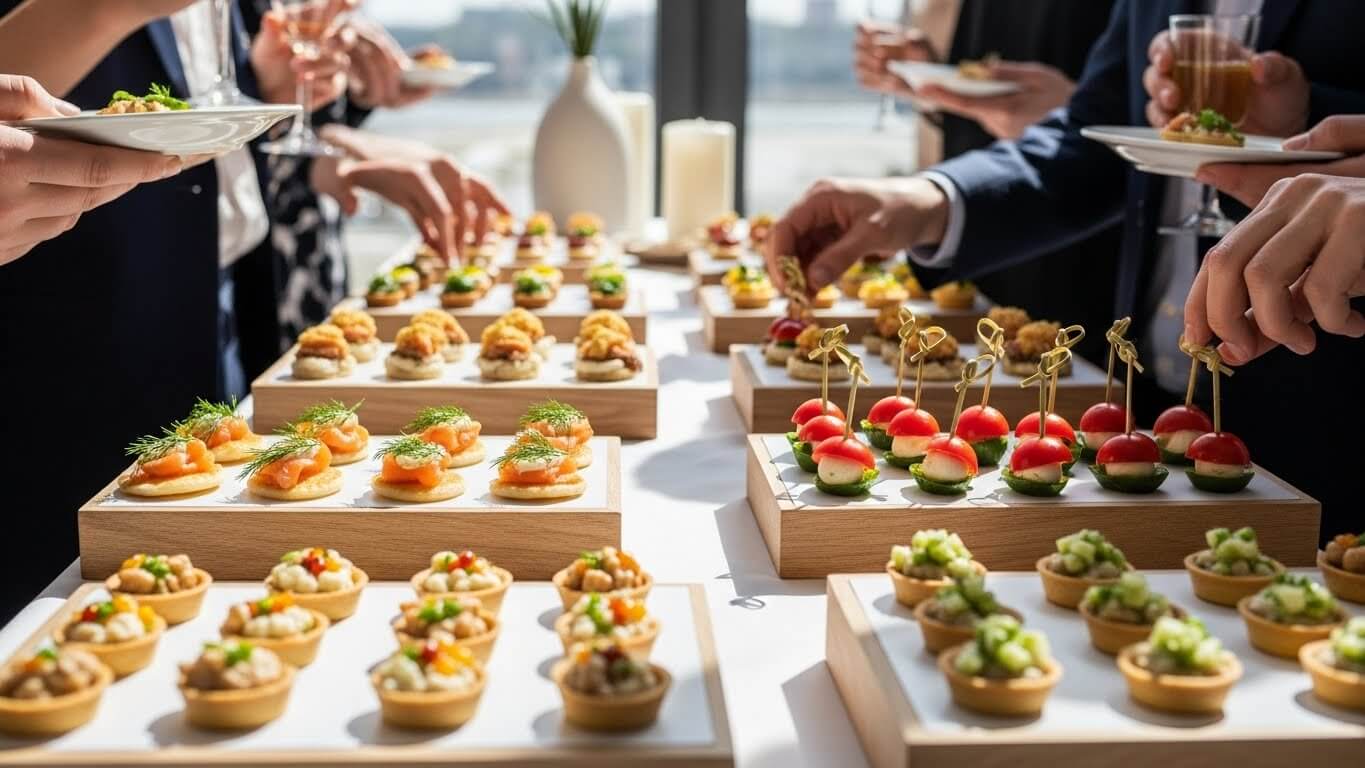
The secret to creating a successful refreshment list lies in achieving the right balance between visual richness and practical consumption. In this arrangement, where guests are usually standing or moving around bistro tables, the food should be bite-sized and require minimal use of cutlery. Rather than limiting the menu to standard snacks such as nuts, crisps, and crudité platters, you should choose options that are both visually appealing and satisfying. Combining cold starters with hot appetizer courses and a sweet finale keeps guests' energy levels high throughout the evening and prevents them from feeling hungry.
- Cold Canapés: Elegant crackers and slices of toasted bread topped with smoked salmon, Roquefort cheese, walnuts, or sun-dried tomatoes.
- Hot Snacks: Mini meatballs, sauced chicken skewers, muska böreği, and paçanga pastry bites that can be served easily with cocktail sticks.
- Fresh Flavours: Carrot and cucumber sticks served in shot glasses with hummus, guacamole, or yoghurt-based dips.
- Sweet Treats: Bite-sized fruit tartlets, mini éclairs, macarons, and pieces of fruit served with a chocolate fountain.
- Beverage Station: Colourful cocktails prepared with seasonal fruits, varieties of mint lemonade, and unlimited soft drink service throughout the evening.
When planning the menu, considering your guests' possible dietary preferences is just as thoughtful as providing variety. Including several vegan, gluten-free, or child-friendly alternatives in tray service improves the quality of your event and ensures that no one is left hungry. Having refreshments circulated by waiters at regular intervals and served at the appropriate temperature prevents congestion around the bistro tables and allows everyone equal access to the food. A well-designed and delicious menu can be satisfying enough that guests will not miss a traditional seated dinner.
Venue Decoration and Music Selection Suitable for the Cocktail Concept
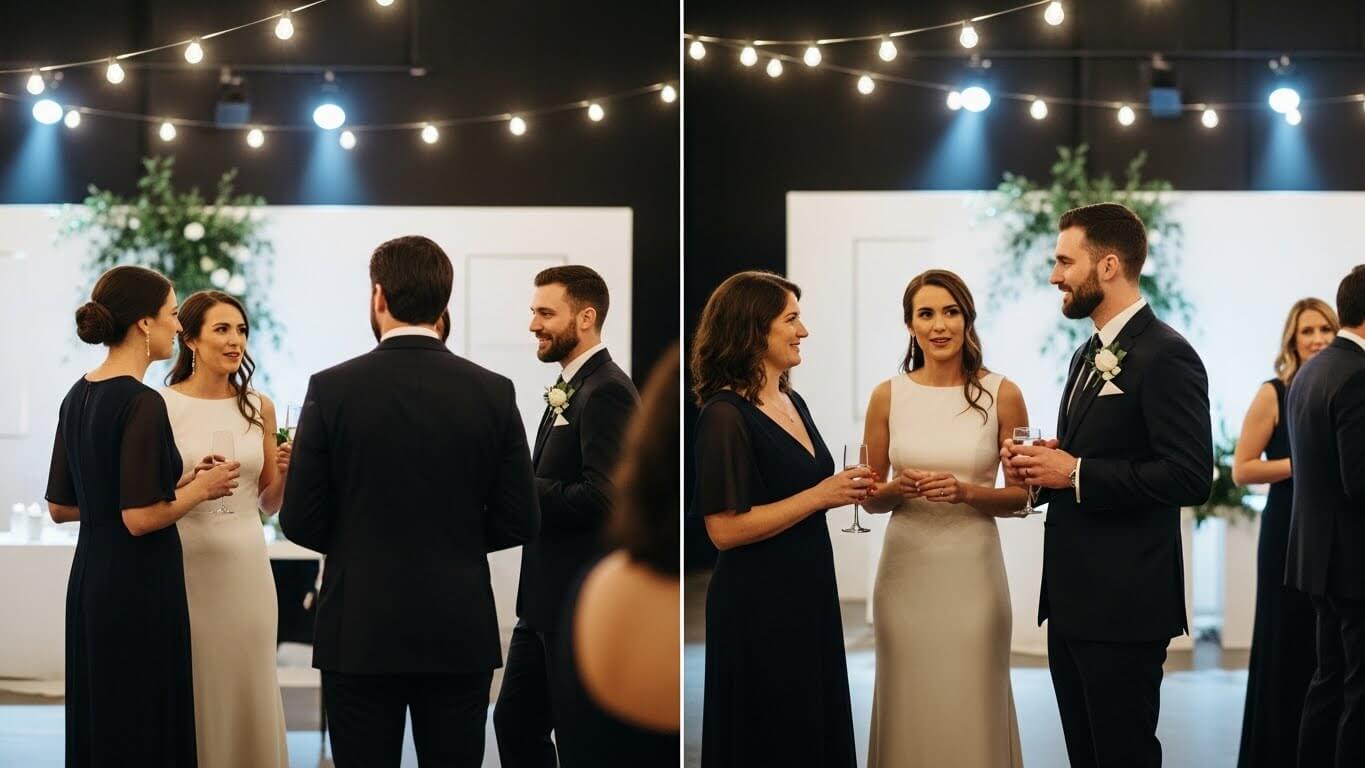
The most fundamental element shaping the visual identity of cocktail weddings is the bistro-table arrangement, which preserves the spaciousness of the venue and freedom of movement. Instead of large, bulky table arrangements that occupy excessive space, high tables decorated with minimalist glass vases, elegant candlesticks, or single-stem flowers should be preferred. This simple styling allows guests to move comfortably throughout the area while giving the venue a modern and sophisticated atmosphere. Choosing a colour palette based on pastel tones or elegant metallic details that complement the venue's natural character creates visual consistency.
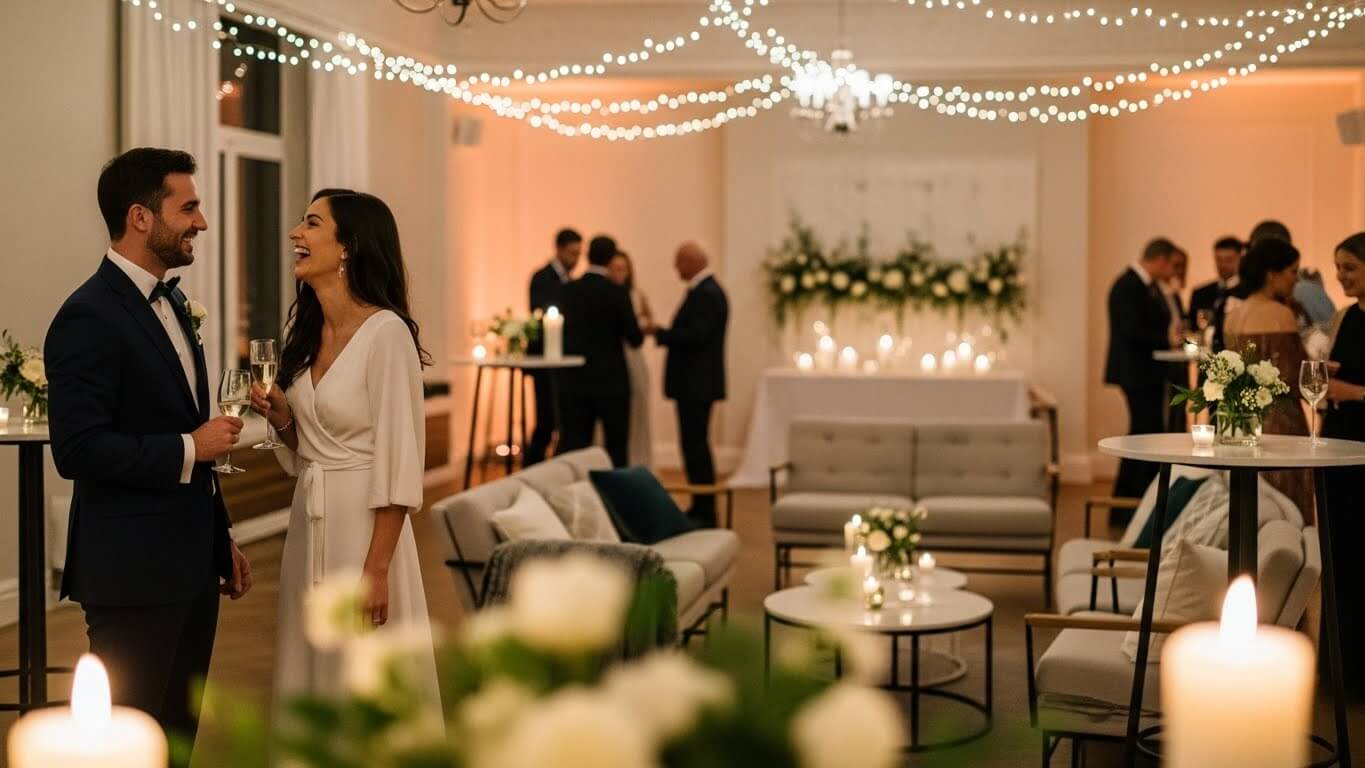
Lighting design is a critical detail that directly affects both the atmosphere of the evening and the quality of the photographs. Particularly at outdoor or country-garden events, rustic lanterns hung from trees, fairy lights, and soft ground lighting create a romantic silhouette. In indoor venues, amber spotlights reminiscent of sunset tones or decorative lighting that creates a dim atmosphere should be used instead of harsh bright-white lights. Adjusting the light to the correct angle and warmth helps conceal imperfections in the venue while making guests feel far more comfortable.
Music selection is like a hidden conductor directing the energy of the event and requires a strategically planned flow in this concept. During the welcome and initial refreshment period, instrumental jazz, bossa nova, or soft lounge music should be played at a level that allows guests to converse comfortably. Avoiding high-volume performances at this stage is extremely important so that guests can socialize without being disturbed by noise and gradually settle into the atmosphere. The background melody should not overpower the conversation but gently accompany it.
As the evening progresses, the tempo should gradually increase, shifting the atmosphere from calm to lively and party-oriented. The most suitable option for the dynamic character of the cocktail concept is generally a professional DJ performance with a broad repertoire and the ability to read the crowd. If live music is preferred, boutique orchestras or trio groups with compact stage requirements adapt more effectively to the venue's acoustics and physical conditions. At the height of the entertainment, upbeat pop songs or nostalgic classics keep the dance floor full and create a memorable finale.
How Should the Wedding Dress and Attire Be Chosen for a Cocktail-Style Wedding?
The movement and extended periods of standing associated with the cocktail concept make it essential to combine comfort and elegance when choosing attire. At this type of dynamic event, it is extremely difficult for brides to remain comfortable in gowns with metre-long trains, heavy beaded embellishments, or voluminous princess skirts with large hoops. Instead, lightweight designs with modern lines that complement the spirit of the venue and do not restrict movement come to the forefront. Strict tuxedo rules also disappear for grooms, giving way to more relaxed elegance, linen-blend suits, or waistcoat combinations.
- Grecian and Bohemian Cuts: Flowing chiffon fabrics, simple A-line styles, or midi-length dresses with vintage details are both elegant and highly practical.
- Footwear Choice: Since you will be standing and dancing for hours, chunky block heels, wedges, or elegant flats are lifesaving alternatives to thin high heels.
- Fabric Selection: Breathable, lightweight, and flowing crepe or silk textures should be preferred instead of heavy satin or thick brocade fabrics.
- Groom's Style: Rather than classic black formal suits, slim-fit suits in blue, grey, beige, or earthy tones, shirts without bow ties, and smart-casual jackets blend perfectly with the atmosphere.
- Accessory Balance: Hair accessories made from fresh flowers, pearls, or minimalist jewellery complete the natural look better than extravagant, heavily jeweled tiaras.
When making your selection, whether the venue is outdoors or indoors is a decisive factor. At poolside venues or country gardens, the ground conditions and possible weather should be considered when deciding on the skirt length and fabric weight. The bride and groom's ability to enjoy themselves freely on this special day is directly related to how comfortable they feel in their attire. Modern choices that avoid excess, do not restrict the body, and reflect personal style best express the intimate and effortlessly cool atmosphere of a cocktail event.
Why Should You Plan with a Catering Company?
Food and beverage service, one of the most complex parts of event management, becomes a flawless experience when entrusted to a professional team. While amateur solutions or the venue's standard packages may sometimes be insufficient, an expert catering company removes the entire operational burden from your shoulders. This allows you to focus solely on enjoying the moment rather than dealing with technical details such as service timing, product freshness, or temperature control.
Experienced companies directly elevate the quality of the reception through their broad menu selections and visual aesthetics. Beyond standard plates, creative presentations prepared specifically for your concept and flavours appealing to different tastes impress your guests. In addition, strict attention to food safety standards and hygiene rules prevents unpleasant surprises that may occur at crowded events.
Good planning is not only about delicious food; how that food reaches the guests is equally important. Professional service staff manage the crowd and the flow correctly, ensuring that refreshments are distributed evenly and quickly throughout the venue. A friendly and trained team prevents disorder, avoids congestion between the bistro tables, and ensures that glasses or plates do not accumulate in the event area.
From a cost-management perspective, working with a corporate partner helps protect your budget, contrary to common belief. Accurate calculations based on the number of guests prevent unnecessary food waste and eliminate unexpected expenses. Managing the required equipment, staff, and supplies through a single provider saves time and energy while helping guarantee the success of the event.